


IEEE Spectrum’s transportation coverage this year covered breakthroughs in electric vehicles, batteries, charging, automation, aviation, maritime tech and more. Readers followed the race to rebuild U.S. magnet manufacturing, rethink EV-charging architecture, and reinvent automotive software. They tracked China’s sprint toward five-minute charging, the rise of high-power home chargers, and the push to automate airports. Our most-read stories also explored next-generation navigation, zero-carbon shipping fuels, record-size electric vessels, and early road tests of solid-state batteries. Read on for our roundup of the transportation stories published in 2025 that readers found most compelling.
 Business Wire
The most-visited transportation post of the year focused on the United States’s efforts to rebuild a domestic supply of neodymium-iron-boron (NdFeB) magnets—critical components for EVs, wind turbines, HVAC systems, and many military systems. MP Materials has begun trial production at its new Texas plant, with plans to ramp up to between 1,000 and 3,000 tonnes per year and supply companies like General Motors. Other U.S. projects from e-VAC Magnetics, Noveon, USA Rare Earth, and Quadrant are also emerging.
But these efforts are dwarfed by China’s rare earths industry: China makes 85 to 90 percent of NdFeB magnets and 97 percent of the underlying rare earth metals, with individual Chinese firms producing tens of thousands of tonnes—far more than all non-Chinese plants combined. China also has massive unused refinement and production capacity, keeping global prices low.
MP Materials’ unique mine-to-magnet strategy could offer intelligence and supply-chain resilience, but competing with China’s subsidies and scale will be extremely difficult. The U.S. Department of Defense may pay a premium for “friendly-nation” magnets, but cost-obsessed automakers like GM might resist higher domestic prices.
 Jim West/REA/Redux
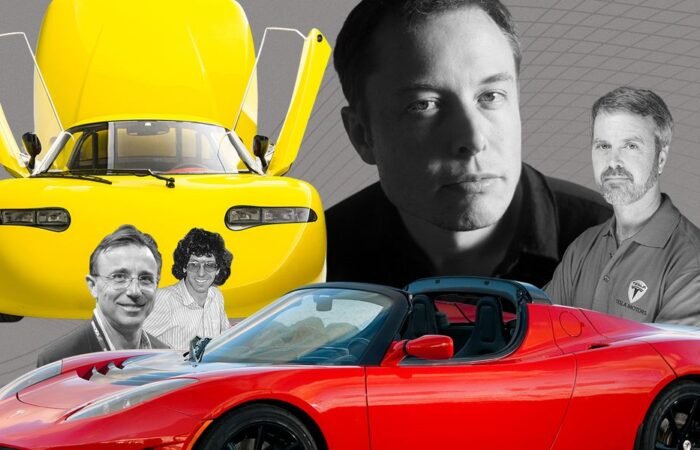
A strong public EV-charging network is essential for mass electric-vehicle adoption, especially for drivers who can’t reliably charge at home. Yet today’s fast-charging stations are expensive and complex largely because of one feature: galvanic isolation—the transformer-based safety barrier that protects against electric shock when ground connections fail. This isolation hardware accounts for roughly 60 percent of charger power-electronics cost and about half of power losses, making fast chargers costly to build and maintain. The authors of this piece—veterans of AC Propulsion, whose early technology influenced the Tesla Roadster—argue that galvanic isolation is no longer necessary.
The authors propose a new approach they call direct power conversion (DPC): eliminate the isolation link entirely and replace it with: (1) a double-ground system with ground-continuity detection to prevent shock hazards, and (2) a buck regulator to handle voltage mismatches between the grid and the EV battery. Removing isolation would simplify chargers from four power-conversion stages to just one (plus a buck regulator if needed). This could cut charger hardware costs by more than half, improve efficiency by 2–3percent, enable much cheaper fast-charging stations, allow EV onboard chargers to become powerful enough for Level 3 charging, and accelerate expansion of public charging infrastructure.The authors argue that simplifying chargers—and shedding old assumptions about galvanic isolation—is the fastest path to an affordable and reliable EV-charging network, which is critical to broad EV adoption.

BYD has unleashed megawatt-class EV charging in China, delivering 400 kilometers of range in five minutes—triple the power (and thus triple the speed) of today’s best U.S. setups. A Han L sedan briefly hit 1,002 kilowatts on BYD’s new 1,000-volt platform, which uses 1,500-V silicon-carbide chips and redesigned lithium iron phosphate batteries to enable safe, ultrafast charging. BYD’s vertically integrated approach—building cars, batteries, and chargers—lets it scale quickly and keep prices low. The company has already deployed 500 megachargers and plans 4,000 more, pushing China far ahead as rivals like Huawei and Zeekr race to match speeds up to 1,500 kW.China makes 85 to 90 percent of NdFeB magnets and 97 percent of the underlying rare earth metals, with individual Chinese firms producing tens of thousands of tonnes—far more than all non-Chinese plants combined.
 ChargePoint
While BYD is amping up public EV charging speeds so that adding range takes no longer than filling a petrol vehicle’s fuel tank, another company is pursuing a charging strategy that makes better use of the time when vehicles sit idle—which is most of the time.
 MCKIBILLO
Airports are rolling out a wave of new automation to speed trips from curb to gate. Copenhagen Optimization’s Virtual Queuing lets travelers reserve security times, with machine-learning models adjusting slots and staffing in real time. Electronic Bagtags generate paperless luggage tags via NFC, while Idemia’s biometric systems verify identity with a quick face scan. Smiths Detection’s X-ray diffraction machines identify materials by molecular “fingerprint,” reducing false alarms. Amazon’s Just Walk Out shops enable cashierless purchases, and Avidbots’ Neo robots autonomously scrub terminal floors. Even boarding gets smarter with systems that flag passengers trying to jump the queue.Removing galvanic isolation could simplify chargers from four power-conversion stages to just one. This could cut charger hardware costs by more than half, improve efficiency by 2–3percent, and enable much cheaper fast-charging stations.
From Your Site Articles
Related Articles Around the Web
More Information & Source
Original Source:
Visit Original Website
Read Full News:
Click Here to Read More
Have questions or feedback?
Contact Us

Other Articles





No Comment! Be the first one.